

How to Become a Falconer: A Step-by-Step Guide
This article was drafted with AI assistance and reviewed by a human before publishing. Sources are listed below so you can verify everything yourself.
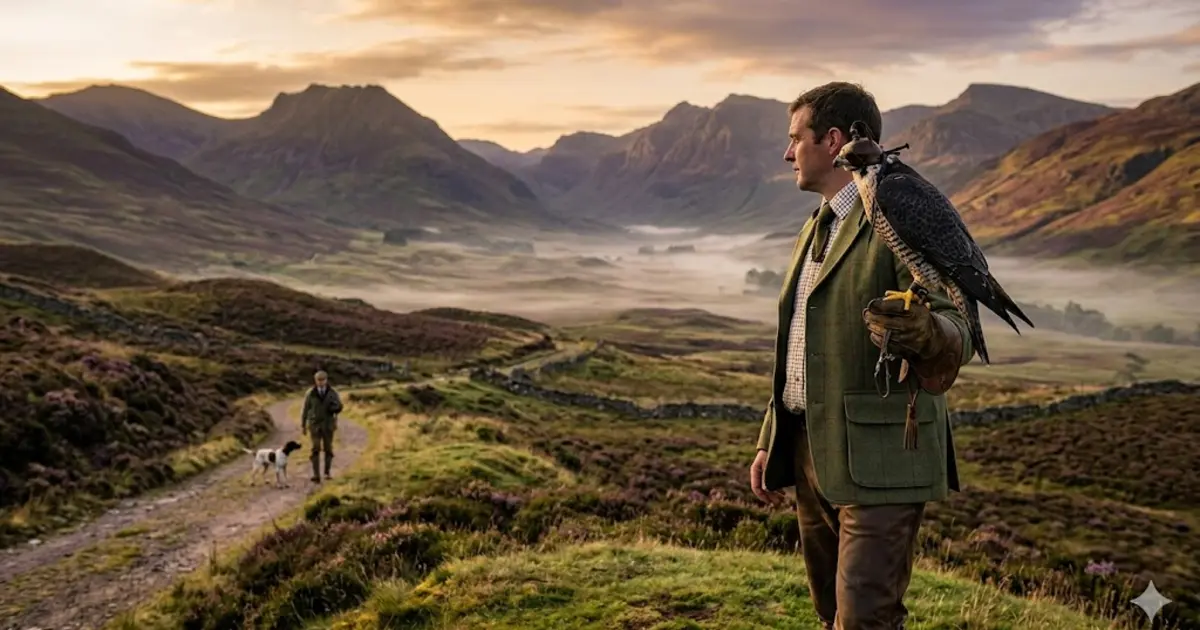
Falconry is the ancient practice of training a raptor — a hawk, falcon, or eagle — to hunt wild quarry in partnership with a human handler. It is also one of the most carefully regulated outdoor pursuits in the United States, governed by both federal law and individual state requirements. The path from curious beginner to a licensed falconer flying your first bird takes real commitment, but it is a clear, sequential process that thousands of people complete every year.
TL;DR: Becoming a licensed apprentice falconer requires seven steps: understand the commitment, find a General or Master falconer sponsor, pass your state's written exam (≥80%), build and pass inspection of your housing facility, apply for your apprentice permit, acquire your first raptor (one bird only), and complete a minimum 2-year apprenticeship under your sponsor's guidance. USFWS sets the federal baseline under 50 CFR 21.82; your state wildlife agency issues the actual permit.
How long does it take to become a falconer?
The minimum time from starting the process to holding a General-level permit — the level at which you can fly more than one bird and expand your species options — is roughly three years. The 2-year apprenticeship cannot be shortened by any school program or accelerated training.
The realistic timeline for the earlier steps before the apprenticeship even begins is 6 to 18 months, depending primarily on how quickly you find a willing sponsor and how long your state's facility inspection waitlist runs. Expect the full journey from research to General falconer to take closer to three to four years for most people.
Step 1: Understand the commitment — time and money
Before doing anything else, honestly assess whether falconry fits your life. A raptor in training requires daily attention. During the active training and hunting season, experienced falconers typically describe a commitment of 10 to 15 hours per week — and that does not count the time spent building facilities or studying regulations before you even have a bird.
The financial investment is real but not prohibitive. A typical breakdown for a first-year apprentice looks like this:
- Mews construction: $200–$1,000 depending on whether you adapt an existing shed or build from scratch
- Equipment (glove, jesses, swivel, leash, perch, hood, lure, scale, telemetry): $300–$800
- State permit fees: $25–$150 depending on your state
- Veterinary emergency fund: $200–$500 is a reasonable buffer
Wild-trapped passage red-tailed hawks and American kestrels cost nothing to acquire — trapping them from the wild is part of the tradition and is covered by your permit. Annual ongoing costs for food and maintenance typically run $200–$700 per year.
Step 2: Find a falconry sponsor
Finding a sponsor is consistently described by experienced falconers as the hardest single step for most beginners. Federal regulations under 50 CFR 21.82 require that your sponsor be a General falconer with at least 2 years at that level (and at least 18 years old), or a Master falconer. Sponsors are not obligated to take on apprentices, and in less-populated areas qualified sponsors can be scarce.
The most effective route to finding a sponsor is through your state or regional falconry club. The North American Falconers Association (NAFA) maintains a directory of affiliated state clubs at n-a-f-a.com. Attending a club meeting, field meet, or demo day is the single best first move — sponsors take on apprentices they have met and trust, and that trust develops through in-person contact.
Federal rules cap each sponsor at three apprentices at one time, so even a willing sponsor may have a waitlist. Start this search early — ideally before you begin building your facilities.
Step 3: Pass the state falconry exam
Every state requires a written examination before issuing an apprentice permit. The federal standard under 50 CFR 21.82 requires you to answer at least 80% of questions correctly. Most states use a 100-question exam, meaning you can miss no more than 20 questions. The exam covers:
- Raptor biology — anatomy, molt cycles, species identification, behavioral cues
- Housing and equipment — mews dimensions, perch types, tethering gear
- Health and husbandry — weight management, signs of illness, nutrition
- Training and hunting — manning, lure work, legal quarry, ethical obligations
- Federal and state regulations — 50 CFR Part 21, permit classes, reporting requirements
There is no national exam portal. You register through your state wildlife agency. Some states schedule exams quarterly; others require an appointment. Plan to study for two to three months before sitting.
Exam tip: The 80% threshold is non-negotiable and applies in every state. Many candidates who fail underestimate how heavily the exam tests raptor biology — not just regulations. Build your study plan so biology and health topics get as much attention as the rules do.
For targeted practice on all five topic areas, Ryno Tools offers practice questions drawn from the same subject matter as state exams — see the Falconry Apprentice quiz on the home page.
For a deeper look at what the exam tests and how to register, see our post on how many questions are on the falconry apprentice exam.
Step 4: Build your facilities and pass the inspection
You cannot receive your permit until a representative from your state wildlife agency has inspected and approved your housing facility. This inspection must happen before the permit is issued — not after you acquire a bird.
The facility you need is called a mews: an enclosed structure where your raptor lives when not being flown or trained. Federal minimums for an apprentice-level bird require inside dimensions of at least 8 feet × 8 feet × 6 feet (length × width × height). No gap or opening in the structure may exceed 1 inch — to prevent escape and bar entry by predators. The door must have a secure latch the bird cannot open from inside.
You will also need a weathering area: a secure outdoor enclosure where the bird can be tethered in natural light. It must be fully covered and free of any gap larger than 1 inch.
Schedule your inspection early — in some states there can be a wait of several weeks to get a wildlife officer out for the site visit. Do not start the mews build without first confirming your state's specific dimensional requirements, as some states set minimums above the federal baseline.
For the complete breakdown of mews dimensions, perch types, and equipment standards — all of which are tested on the exam — see our post on falconry mews and housing standards.
Step 5: Apply for your apprentice permit
Once you have passed the exam and had your facilities inspected, you apply for your apprentice falconry permit through your state wildlife agency. The permit itself is issued by the state — there is no separate federal permit application. What the USFWS manages is the 3-186A electronic reporting database, which your state coordinates, and which you use throughout your falconry career to report any acquisition, transfer, loss, or death of a raptor.
Some states process permits quickly; others have administrative queues. A few states periodically restrict new apprentice permits due to inspection staffing or low raptor population concerns. Contact your state agency to confirm current processing timelines before assuming a quick turnaround.
For state-specific details on age minimums, fees, exam schedules, and species lists, see our post on falconry license requirements by state.
Step 6: Acquire your first raptor
At the apprentice level, federal regulations allow you to possess no more than one raptor regardless of how many permits you hold. If you trap a bird from the wild, it must be less than one year old, and may not be a nestling — this window targets birds known as passage hawks, young raptors in their first season of independence who have already demonstrated basic survival skills but have not yet bred.
The two most common choices for apprentice birds are:
- Red-tailed hawk (
Buteo jamaicensis) — the most widely recommended first bird; abundant across North America, tolerant of the learning curve, and ideal for ground quarry hunting such as rabbits and squirrels - American kestrel (
Falco sparverius) — smaller, faster, and suited to hunting small birds; requires quicker reflexes and more advanced field skills but is a rewarding option in areas with suitable prey
Both species are abundant in the wild and legal to trap during state-specified periods. You may also acquire a bird from a licensed falconer, in which case the bird's age and source must comply with applicable transfer rules.
Several species are prohibited for apprentice-level wild take regardless of their abundance, including bald eagles, golden eagles, peregrine falcons, Swainson's hawks, swallow-tailed kites, and certain owls (flammulated, elf, and short-eared). These restrictions are spelled out in 50 CFR 21.82.
Step 7: Complete the 2-year apprenticeship
The apprenticeship is not a waiting period — it is an active, mentored practice. Federal regulations require you to maintain, train, fly, and hunt with your raptor for at least 4 months in each year of the two-year period. Sitting out a season does not count toward your apprenticeship clock.
Your sponsor must provide active guidance throughout. They may not carry more than three apprentices simultaneously, and in some states they are required to be present for your first trapping or handling session. At the end of the two years, your sponsor provides written certification of your experience, and you then apply to your state wildlife agency for advancement to the General falconer level.
Key practical realities of the apprenticeship year:
- You will spend considerably more time on daily care — weighing, feeding, manning — than on actual hunting
- Weight management is critical; a bird that is too heavy will not hunt, and a bird that is too lean is at health risk
- Your sponsor is your primary resource when things go wrong, which they will during training
- Annual raptor status reports are filed through the federal 3-186A database
What comes after the apprentice level?
After completing the 2-year apprenticeship and advancing to General falconer, you can possess up to three raptors (specific limits vary by state), fly a broader range of species, and eventually sponsor your own apprentices once you have held the General permit for at least two years. The Master falconer level — the highest — becomes available after five additional years at General, and requires a demonstrated depth of knowledge and experience that most states assess through documentation and a committee review rather than another written exam.
Frequently asked
Can I take the exam before finding a sponsor?
Yes, in most states you can sit the written exam at any point — you do not need a sponsor to register for it. However, you cannot receive your permit or possess a raptor without one. Starting your sponsor search well before your exam date is strongly recommended, since finding a willing sponsor often takes longer than studying for the test.
How old do I have to be to become a falconer?
The federal minimum age under 50 CFR 21.82 is 12 years old. Applicants under 18 require a parent or guardian to co-sign the application and assume legal responsibility. Several states set their minimum age higher — Ohio requires 16, and Florida and New York require 14. Always check your state's current rules.
Can I have more than one bird as an apprentice?
No. Federal regulations cap apprentice-level possession at one raptor, regardless of how many state permits you hold. This limit exists because the apprenticeship is designed to build skill progressively — managing a single bird properly is demanding enough in the first two years. You will be able to expand to multiple birds once you advance to General falconer.
Ready to test your knowledge?
Practice Falconry — Apprentice on Ryno Tools →Sources
- 50 CFR § 21.82 — Falconry Standards and Falconry Permitting — Electronic Code of Federal Regulations (eCFR) (accessed 2026-07-01)
- Falconry — USFWS Migratory Birds Program — U.S. Fish and Wildlife Service (accessed 2026-07-01)
- Becoming a Falconer — North American Falconers Association — North American Falconers Association (NAFA) (accessed 2026-07-01)
- How to Become a Falconer (2026) — FalconryLab — FalconryLab (accessed 2026-07-01)
- 50 CFR § 21.82 — Cornell Legal Information Institute — Cornell LII / eCFR (accessed 2026-07-01)
Found this helpful? Share it: